




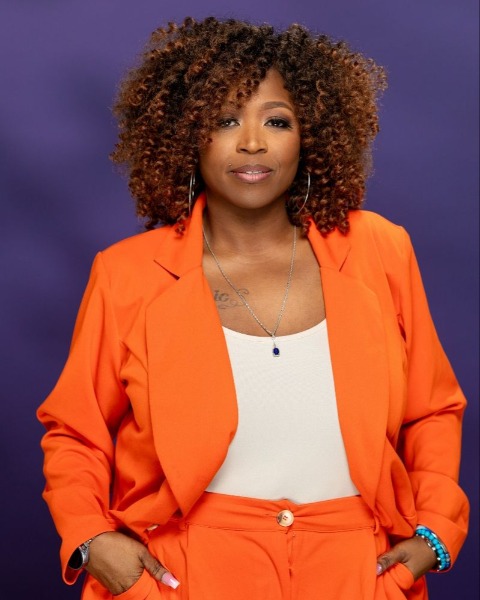
President & CEO
Scott Center for Observation, Treatment and Transition
Toledo, Ohio, United States
Dr. La’Shardae Scott is a TEDx Speaker, changemaker, and accomplished leader in the field of social work, blending academic expertise, personal experience, and community-driven passion to transform care for underserved populations. She serves as President and CEO of the Scott Center for Observation, Treatment, and Transition in Toledo, Ohio—the first nonprofit in the state dedicated to supporting individuals with sickle cell disease as they transition from pediatric to adult care.
Holding a Doctor of Social Work in Administration and Leadership from the University of Kentucky, a Master of Social Work in Mental Health and Substance Use Recovery from Eastern Michigan University, and a Women’s Entrepreneurship Certificate from Cornell University, Dr. Scott brings both clinical and administrative strength to her work. She also serves as Region III’s Newborn Screening Coordinator and Sickle Cell Director. She collaborates nationally with the CDC, where she co-developed the first manual on oral health management for sickle cell patients.
As an adjunct professor at the University of Kentucky, Eastern Michigan University, and Delaware State University, Dr. Scott educates future social workers on poverty, inequality, and justice. Her teaching emphasizes critical thinking, cultural humility, and systemic change.
Her work has earned national recognition, including the SCDAA’s CHW P.O.W.E.R. Award, NASW Ohio’s Social Worker of the Year, the Shero of Health Award from the Ohio Commission on Minority Health, and Rising Star in Social Work from the University of Kentucky.
Dr. Scott’s advocacy is deeply personal—she is the proud mother of two sons thriving with sickle cell disease. Her life’s mission is reflected in her writings, national presentations, and TEDx talk, “Redefining Advocacy and Care for Sickle Cell Disease.”
A mother, mentor, educator, and relentless advocate, Dr. Scott continues to push boundaries to improve equity and outcomes for families impacted by chronic illness and systemic injustice.